Lockdown Plans for When Evacuation Is Not the Answer
Comprehensive procedures for when the threat is inside your building.
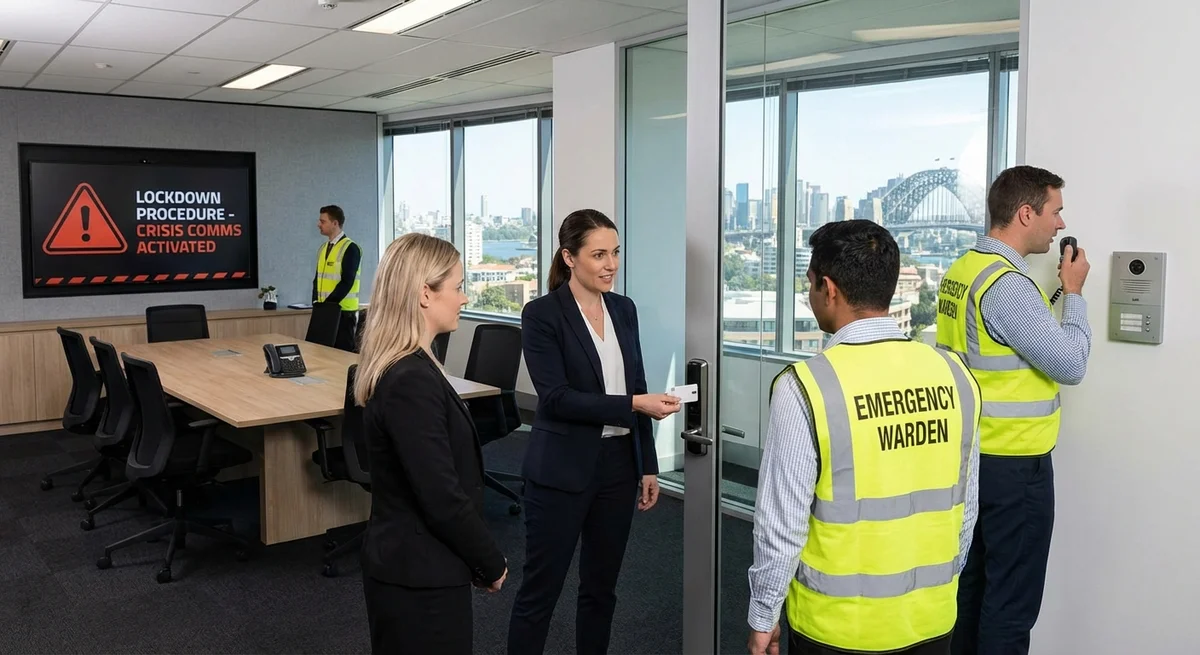
Not Every Emergency Requires Evacuation
Most emergency training focuses on getting people out of buildings. Fire drills, evacuation procedures, assembly points—the default assumption is that safety lies outside.
But some emergencies demand the opposite response. When the threat is outside, when danger lurks in the corridors, or when environmental hazards contaminate the air, evacuation can lead people directly into harm. In these situations, lockdown—securing people inside safe spaces—becomes the appropriate response.
Messana Group develops comprehensive lockdown plans that prepare your organisation for scenarios where staying inside is safer than getting out.
When Lockdown Is Appropriate
Dangerous Individuals in the Vicinity: When someone threatening is near but not inside your building—such as during a nearby crime in progress or civil disturbance—lockdown prevents occupants from encountering danger.
Active Threats Inside the Building: When a violent individual is inside, lockdown procedures shelter people in secure locations while emergency services respond.
Environmental Hazards: Chemical spills, industrial accidents, or smoke from nearby fires can make outdoor air dangerous. Lockdown keeps people inside with filtered air until the hazard passes.
Civil Unrest: Protests, riots, or public disorder near your premises may make it unsafe to send people outside. Lockdown provides protection until conditions stabilise.
Suspicious Packages or Bomb Threats: Depending on the threat assessment, lockdown may be appropriate while the situation is evaluated.
What Our Lockdown Plans Include
Threat Assessment Framework: Guidance for determining when lockdown is appropriate versus evacuation or other responses. Clear decision criteria reduce hesitation and improve response speed.
Lockdown Procedures: Step-by-step instructions for initiating and maintaining lockdown:
- Alerting occupants to lockdown status
- Securing entry points and external doors
- Moving people away from windows and exterior walls
- Directing people to designated safe rooms
- Maintaining quiet and minimising movement
- Communication during lockdown
Safe Room Identification: Analysis of your premises to identify appropriate lockdown locations. Considerations include:
- Door security and locking capability
- Window exposure
- Communication access
- Capacity for anticipated occupancy
- Access to basic amenities for extended lockdowns
Communication Protocols: How to communicate lockdown initiation, status updates, and all-clear notifications. Includes procedures when normal communication systems may be compromised.
Integration with Emergency Services: Procedures for coordinating with police during lockdown situations. How to provide information without compromising occupant safety.
All-Clear Procedures: How to safely end lockdown and account for all occupants. Verification procedures to ensure the threat has genuinely passed.
Recovery Procedures: Post-incident support, debriefing, and return to normal operations.
Lockdown Training
Effective lockdown response requires training beyond simply distributing a written plan. We offer:
Management Briefings: Training for leadership on lockdown decision-making, communication responsibilities, and coordination with emergency services.
Staff Awareness Training: General training for all employees on lockdown procedures, expectations, and individual responsibilities.
Warden Training: Enhanced training for emergency wardens who may coordinate lockdown implementation in their areas.
Exercises: Lockdown drills and tabletop exercises that test procedures without the disruption of full implementation.
Why Specialist Planning Matters
Lockdown situations involve unique challenges that standard emergency planning does not address:
Psychological Factors: Lockdowns can be frightening. People confined in small spaces with uncertain threats may panic or make poor decisions. Good planning addresses psychological management.
Information Management: During lockdowns, rumour and speculation spread rapidly. Procedures must address how accurate information is communicated while maintaining security.
Duration Uncertainty: Unlike evacuations that conclude quickly, lockdowns may last hours. Plans must address extended confinement, including access to necessities.
Legal Considerations: Lockdown involves restricting movement—there are legal implications to consider. Our planning addresses these appropriately.
Integration with Police Response: During active threat situations, police will take control. Your plans must integrate with their response protocols.
Who Needs Lockdown Planning
Educational Institutions: Schools and universities face particular lockdown scenarios and have specific duty-of-care obligations to students.
Healthcare Facilities: Hospitals and clinics must protect patients who cannot easily relocate while maintaining critical care.
Corporate Offices: Any workplace can face lockdown scenarios, particularly in urban areas or buildings with public access.
Retail and Hospitality: Premises with customer access need lockdown procedures that address both staff and visitors.
Government and Critical Infrastructure: Facilities with elevated threat profiles require comprehensive lockdown capabilities.
Our Approach
Site Assessment: We visit your premises to assess lockdown capability, identify safe rooms, and understand your specific risk profile.
Stakeholder Consultation: We work with your management, safety representatives, and security personnel to develop practical procedures.
Plan Development: We create comprehensive lockdown documentation tailored to your premises and circumstances.
Training Delivery: We train your staff on lockdown procedures and their individual responsibilities.
Ongoing Review: We review and update plans as your circumstances change and as best practices evolve.
Ready to get started?
Contact us to discuss your requirements or schedule training for your team.