Chief Warden vs Fire Warden: Understanding the Emergency Management Hierarchy
Understand the difference between Chief Wardens and Fire Wardens, the ECO structure, and how to calculate appropriate warden coverage for your workplace.
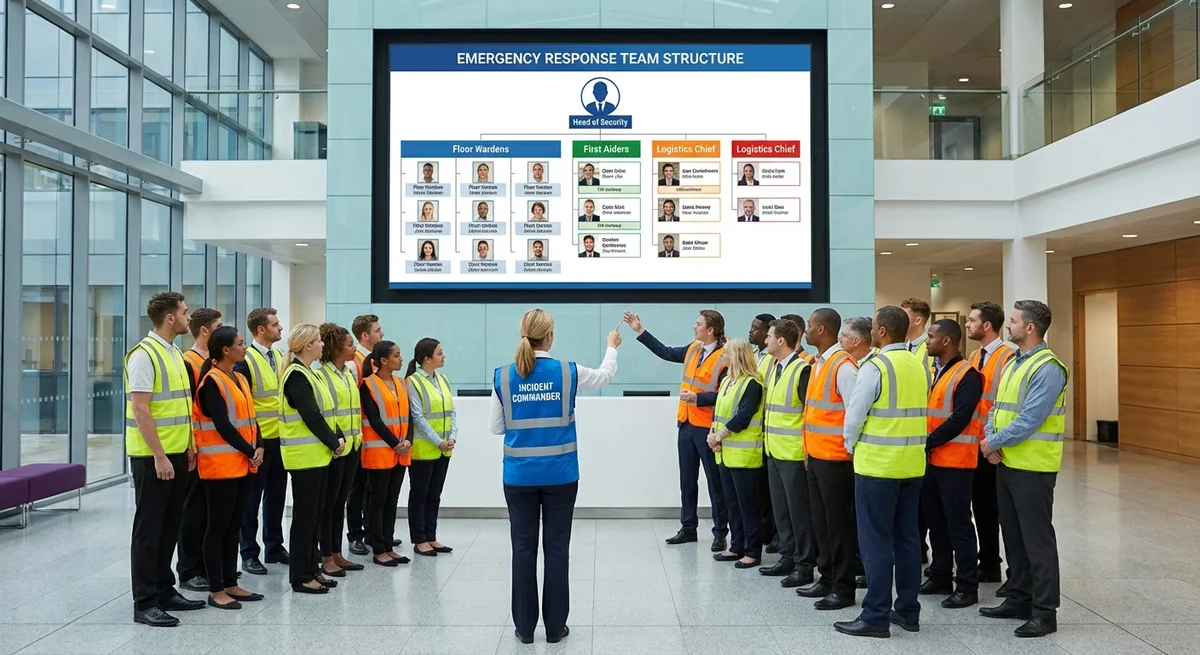
The Emergency Control Organisation Structure
Every workplace needs a clear structure for managing emergencies. The Australian Standard AS 3745 establishes the Emergency Control Organisation (ECO) as the framework for this structure.
Understanding the different roles within an ECO—and how they work together—is essential for effective emergency response.
Chief Warden: Command, Coordination, and Communication
The Role Defined
The Chief Warden is the most senior emergency response role within a facility. During an emergency, the Chief Warden has overall responsibility for the emergency response until emergency services arrive and assume control.
Key Responsibilities
Before Emergencies:
- Ensuring the emergency plan is current and appropriate
- Overseeing ECO training and readiness
- Maintaining emergency equipment and systems
- Conducting or coordinating evacuation exercises
- Liaising with building management and tenants
During Emergencies:
- Assuming overall command of the emergency response
- Making key decisions (evacuate, shelter, partial evacuation)
- Coordinating information from all Area/Floor Wardens
- Communicating with emergency services
- Authorising any re-entry after all-clear
After Emergencies:
- Coordinating debriefs and reviews
- Ensuring incident documentation
- Implementing improvements based on lessons learned
Skills and Attributes
Effective Chief Wardens typically demonstrate leadership and decision-making capability under pressure, clear communication skills, detailed knowledge of the facility and its emergency systems, understanding of the emergency plan and all procedures, and respect from colleagues.
Our Chief Warden training develops these capabilities through scenario-based learning.
Fire Warden: On-Ground Response
The Role Defined
Fire Wardens (also called Area Wardens or Floor Wardens) are responsible for emergency response within a designated area of the facility. They’re the “boots on the ground” during emergencies.
Key Responsibilities
Before Emergencies:
- Maintaining familiarity with their designated area
- Knowing the location of exits, fire equipment, and assembly points
- Being aware of any occupants requiring assistance
- Conducting regular area inspections for hazards
During Emergencies:
- Initiating evacuation of their area
- Conducting systematic sweeps to ensure all areas are clear
- Directing occupants to exits
- Assisting mobility-impaired persons
- Reporting area status to the Chief Warden
After Emergencies:
- Assisting with accountability at assembly points
- Participating in debriefs
- Completing any required documentation
Our Fire Warden training prepares wardens for these responsibilities through practical exercises.
Deputy Roles and Succession Planning
Why Deputies Matter
Emergencies don’t schedule themselves around your staffing. Deputies provide coverage when primary wardens are absent, succession if a warden is incapacitated during an emergency, shared workload during large or complex events, and a development pathway for future Chief Wardens.
Deputy Chief Warden
The Deputy Chief Warden supports the Chief Warden during emergencies, assumes Chief Warden responsibilities when the Chief is absent, may manage specific functions (communications, assembly point coordination), and maintains the same training and knowledge as the Chief Warden.
First Aid Officer Integration
The First Aid Role in Emergencies
First Aid Officers aren’t strictly part of the warden hierarchy, but they’re essential to the ECO. They respond to injuries during emergencies, set up first aid stations at assembly points, triage casualties if multiple injuries occur, coordinate with ambulance services, and document medical incidents.
Our General and First Response Training covers this integration.
How Many Wardens Do You Need?
Calculating Coverage
There’s no single formula, but consider these factors:
Building factors: Number of floors or distinct areas, building complexity, exit locations and evacuation routes, and high-risk areas requiring dedicated coverage.
Occupancy factors: Maximum number of occupants, visitor frequency, mobility-impaired occupants, and shift patterns.
Practical factors: Staff availability and turnover, leave patterns, and geographic distribution of staff.
General Guidelines
As a starting point:
- Chief Warden: 1 per facility (plus deputy)
- Floor/Area Wardens: At least 1 per floor or distinct area, ideally 2+ for coverage
- Ratio consideration: Some guidance suggests 1 warden per 20-50 occupants, but this varies significantly based on building layout
The Coverage Test
Ask yourself: If the alarm sounds right now, do we have wardens present to cover every area? If one warden is on leave, can someone step in? During our quietest staffing times, do we still have coverage?
If any answer is “no,” you need more wardens or better arrangements.
Building Your Complete Warden Team
Recruitment Approach
Look for warden candidates who are regularly present in the areas needing coverage, show interest in safety and helping colleagues, have the personality to remain calm and give directions, are physically capable of conducting sweeps, and will commit to maintaining training.
Training Investment
All wardens need proper training through Fire Warden training for Area/Floor Wardens, Chief Warden training for Chief and Deputy Chief Wardens, regular refresher training (annual recommended), and participation in evacuation exercises.
How Messana Group Can Help
With over 25 years of experience building effective Emergency Control Organisations across Australia, Messana Group provides:
- Chief Warden training: Developing leadership capability for your senior emergency response role
- Fire Warden training: Building competent area response teams
- Evacuation exercises: Testing your ECO in realistic scenarios
- ECO structure reviews: Assessing your coverage and recommending improvements
Next Steps
Build a complete warden team with the right training. Enquire about Chief Warden and Fire Warden training packages or call 1300 622 030 to discuss your ECO development needs.
Related Services
Need Help With Emergency Management?
Contact us for a free compliance assessment and discover how we can help your organisation.